FEATURED ISSUE
Initiative Petition 28 (IP 28), also known as the PEACE Act, proposes significant changes to Oregon's animal cruelty statutes. While often discussed as a hunting and fishing measure, the proposal reaches far beyond outdoor recreation and raises questions involving food production, agriculture, veterinary medicine, wildlife management, scientific research, conservation, local businesses, and Oregon's broader relationship with animals and natural resources.
Supporters argue the measure would strengthen legal protections for animals. Opponents argue it could remove longstanding exemptions that currently provide legal clarity for agriculture, veterinary medicine, wildlife management, scientific research, food production, and other lawful activities.
More than 131,000 signatures had reportedly been submitted by June 17, 2026 to the Oregon Secretary of State — approximately 14,000 signatures above the 117,000 valid-signature minimum required for qualification, or about a 12% buffer.
The final day to submit signatures is July 2, 2026. After submission, the Oregon Secretary of State has up to 30 days to review and verify signatures before determining whether IP 28 qualifies for Oregon's November 2026 ballot.
IP 28, known as the People for the Elimination of Animal Cruelty Exemptions Act, proposes changes to multiple sections of Oregon law governing animal abuse, neglect, and animal sexual assault.
The debate is not simply about whether animals should be protected. Rather, it centers on whether changes to existing law could affect how Oregon manages food production, veterinary medicine, conservation programs, wildlife management, scientific research, agriculture, animal ownership, and outdoor traditions.
Many Oregonians first hear about IP 28 through headlines focused on hunting and fishing. That description is incomplete.
The petition language addresses far more than outdoor recreation. The proposal would modify or remove exemptions related to livestock production, animal husbandry, veterinary practices, scientific research, wildlife management, conservation programs, pest and predator control, rodeos and exhibitions, fish, reptiles, amphibians, birds, mammals, animal breeding practices, and food production systems.
Because Oregon has extensive agricultural production, significant public lands, active wildlife-management programs, strong outdoor traditions, and major conservation investments, many national organizations are closely monitoring the proposal.
Some observers view Oregon as a testing ground for broader policy discussions involving animal rights, food production, conservation, and animal ownership.
Much of the public debate centers on interpretations of the proposal. Rooted Oregon encourages voters to review the actual petition language and certified ballot title for themselves.
“Criminalizes breeding practices, injuring/killing animals, including for food, hunting, fishing. Creates transition fund. Exceptions.”
“Animal” means any nonhuman mammal, bird, reptile, amphibian or fish.
The proposal explicitly includes mammals, birds, reptiles, amphibians, and fish. It is not limited to livestock, pets, hunting, or fishing.
Removes Oregon's statutory definition of “good animal husbandry.”
Existing language covering accepted livestock-management and veterinary practices would be removed from statute.
“Lawful fishing, hunting and trapping activities.”
This exemption is removed in the proposed language.
“Wildlife management practices under color of law.”
This exemption is removed in the proposed language.
“Lawful scientific or agricultural research or teaching that involves the use of animals.”
This exemption is removed in the proposed language.
“Reasonable activities undertaken in connection with the control of vermin or pests.”
This exemption is removed in the proposed language.
“The impregnation of an animal.”
The proposal modifies Oregon's animal sexual assault statute and adds language regarding animal impregnation.
“Animals involved in rodeos or similar exhibitions.”
This exemption is removed in the proposed language.
Source: Initiative Petition 28 (PEACE Act) petition language and certified ballot title, Oregon Secretary of State filings.
One of the biggest debates surrounding IP 28 is not only the measure itself — it is how the measure is described.
Supporters often frame the proposal as an animal welfare measure. Opponents often frame it as a hunting, fishing, farming, food-production, or conservation issue.
The reality is that the proposal touches multiple subjects at once. Voters will ultimately decide whether the proposed legal changes create unintended consequences for Oregon's food systems, conservation programs, rural communities, and outdoor traditions.
Many voters assume controversial ballot measures either will not qualify or are unlikely to pass. Recent Oregon history shows major policy changes can move quickly.
Measure 110 decriminalized possession of small amounts of hard drugs and redirected marijuana tax revenue toward addiction treatment and recovery services.
Measure 114 established a permit-to-purchase requirement for firearms and restricted magazines holding more than ten rounds.
Questions have been raised regarding livestock production, dairy operations, poultry operations, crop protection, agricultural research, food supply chains, breeding practices, animal husbandry, and food production systems.
Questions have been raised regarding veterinary treatment, animal rehabilitation, herd health programs, reproductive veterinary services, livestock medicine, and routine animal care.
Many conservation programs involve population management, habitat restoration, scientific monitoring, predator management, invasive species control, and species recovery efforts.
Oregon's wildlife-management system includes fish, amphibians, reptiles, birds, mammals, threatened species, endangered species, and non-game wildlife.
Discussion frequently centers on livestock breeding, artificial insemination, veterinary reproductive procedures, animal husbandry, and agricultural management practices.
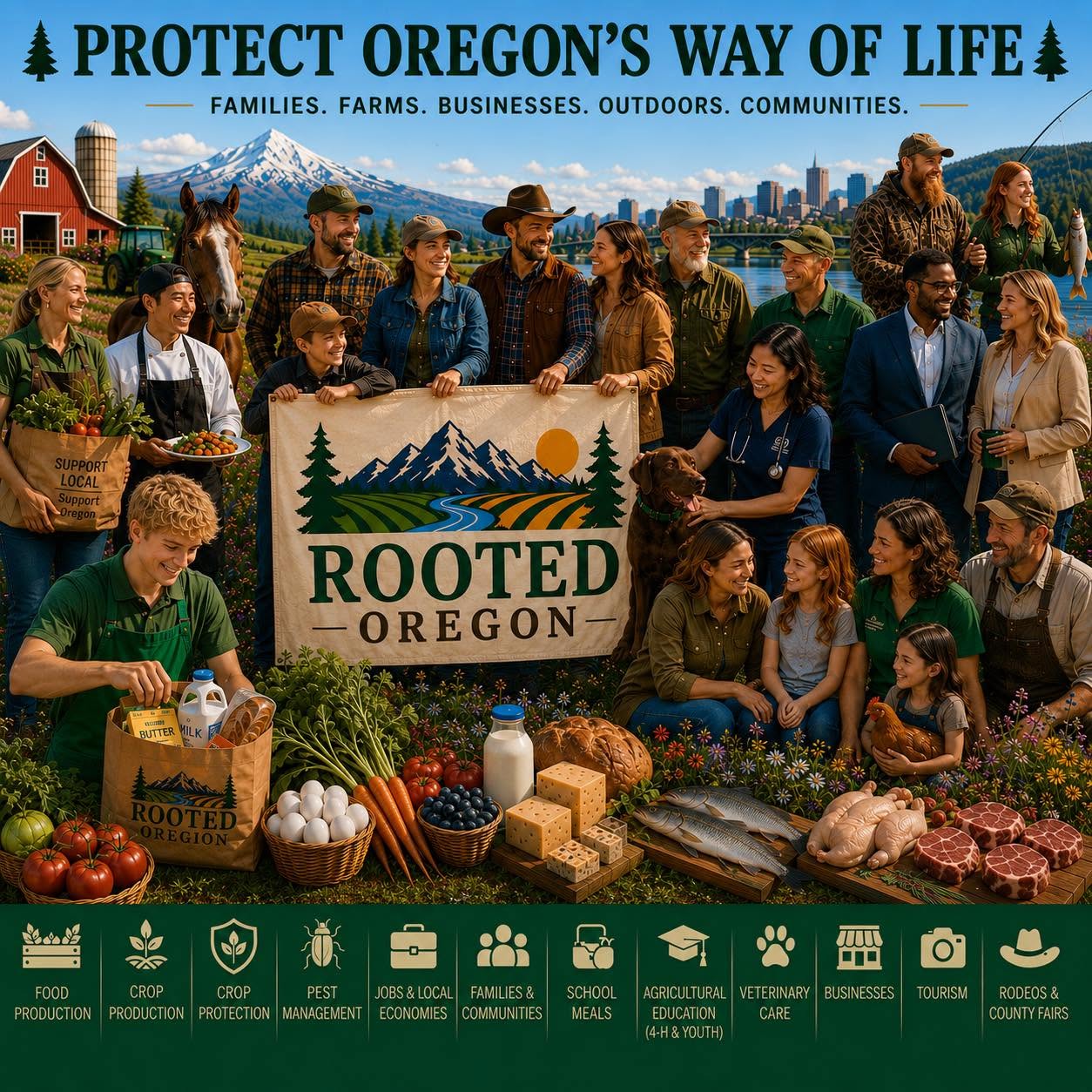
Potentially affected sectors discussed by opponents include agriculture, veterinary services, tourism, restaurants, outdoor recreation, sporting goods, county fairs, FFA, 4-H, and youth education programs.
IP 28 is a proposed ballot measure that would modify Oregon's animal-cruelty statutes by removing or changing several longstanding exemptions currently found in state law.
Not yet. More than 131,000 signatures had reportedly been submitted by June 17, 2026. The Secretary of State must still verify signatures and determine whether the proposal qualifies.
“Criminalizes breeding practices, injuring/killing animals, including for food, hunting, fishing. Creates transition fund. Exceptions.”
No. The proposal addresses exemptions involving agriculture, conservation, veterinary medicine, research, breeding, wildlife management, pest control, rodeos, and other activities.
Yes. The petition's definition of animal includes fish.
Yes. The petition's definition of animal also includes amphibians and reptiles.
Current exemptions for wildlife management activities would be removed under the proposal. Opponents argue this could affect conservation practices. Supporters argue animal protections should apply more broadly.
The proposal removes references to good animal husbandry and modifies multiple sections governing animal treatment and care. Opponents argue this creates uncertainty around common agricultural practices.
Some legal observers have noted that treaty-protected tribal rights originate under federal law, creating questions about how state-level changes would interact with existing federal protections.
Yes. Similar proposals appeared in previous petition cycles and did not qualify for the ballot. IP 28 represents the latest version of those efforts.
Many organizations believe the proposal has a credible path to qualification and that voters should understand its potential implications before the November election.
This library brings together articles, videos, public statements, research, and educational resources related to IP 28 and the communities that may be impacted.
Resources from veterinary and animal-care organizations regarding animal health, husbandry, public health, research, and legal uncertainty.
Resources related to farms, ranches, dairy, livestock, food production, rural economies, and grocery costs.
Resources related to wildlife management, habitat stewardship, conservation funding, fish and wildlife agencies, and outdoor conservation tools.
Resources related to local jobs, rural economies, tourism, restaurants, businesses, supply chains, and community services.
Resources related to hunting, fishing, outdoor heritage, family traditions, and recreation.
Long-form discussions, interviews, and video explainers related to IP 28.
Receive updates on IP 28, coalition endorsements, and campaign developments.